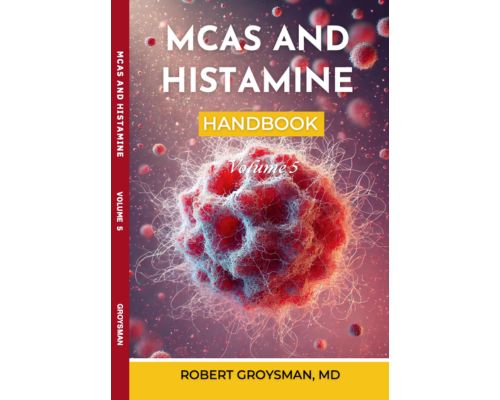
Reacting to Foods You Used to Eat Without a Second Thought?
If you developed sudden food sensitivities, unexplained flushing, rashes, or gut issues after COVID, unstable mast cells and histamine overload may be driving your symptoms.
Inside This Volume
What You'll Learn
What mast cells are, why they become unstable after COVID, and how they differ from typical allergies
The difference between histamine intolerance and mast cell activation syndrome (MCAS) in Long COVID
Why your labs keep coming back normal even when your symptoms are severe
How to identify hidden triggers including foods, fragrances, stress, and hormonal shifts
Antihistamines, mast cell stabilizers, and prescription options explained in plain language
The low-histamine diet: what to avoid, what to eat, and how to safely expand your diet over time
How MCAS connects to POTS, gut dysbiosis, and the vagus nerve
About This Volume
From the author
Mast cells are immune cells that most people never think about. Under normal conditions, they stay quiet and protective. But after COVID-19, something changes. These cells become hyperreactive, releasing waves of histamine and other inflammatory chemicals in response to everyday triggers: certain foods, temperature changes, fragrances, even stress. The result is a cascade of symptoms that can affect your skin, gut, heart, and brain, often all in the same day, with no obvious pattern.
This is not a standard allergy. Long COVID mast cell activation operates through different pathways, which is why allergy testing often comes back clean and why standard treatments may fall short. Dr. Groysman explains the specific mechanisms that make Long COVID MCAS distinct, including its connection to the vagus nerve, methylation pathways, and hormonal cycles. He walks through the diagnostic challenges, the tests worth pursuing, and why clinical pattern recognition matters when lab results are inconclusive.
The treatment chapters cover the full spectrum: H1 and H2 blockers, mast cell stabilizers like cromolyn and ketotifen, supplements such as quercetin and PEA, the low-histamine diet, DAO enzyme support, and prescription options for severe cases. Each approach is explained with dosing context, timing considerations, and practical guidance for introducing new treatments without triggering flares. Whether you are just beginning to connect the dots or already deep into your recovery, this book gives you a structured path toward stabilizing your system and reclaiming tolerance.
From the Book
"People who had never been allergic before were suddenly reacting to foods, fragrances, and even their own medications. They developed rashes, gut issues, dizziness, heart palpitations, and brain fog. Their symptoms didn't always follow a pattern, and their lab tests often came back normal."
Dr. Robert Groysman, MD
Get Your Copy
Understand what's happening
in your body.
Written for patients who want real answers, for patients and the clinicians who treat them.
Buy Now: $24.99Common Questions
Before You Buy
What format is this book available in?
The book is available as a digital download (PDF/eBook). A paperback edition is also available on Amazon. Once purchased through the Long COVID Family store, you receive instant access to the digital version.
Is this written for patients or healthcare providers?
Both. The series is written so that patients can understand their biology without a medical background, and so that physicians have a structured, mechanism-based framework they can use with their own Long COVID patients. Dr. Groysman specifically avoids jargon and always explains the "why" behind the science.
Do I need to read Volume 1 first?
Volume 1 introduces the full six-mechanism framework and is the recommended starting point. The mechanism-specific volumes (2–7) build on that foundation, though each volume can also stand alone if you already know which mechanism you want to explore.
What is the refund policy?
For refund and return questions, contact the Long COVID Family store directly at customer@covidinstitute.org or call (214) 390-7557. Due to the digital nature of the books, refunds are handled on a case-by-case basis.
Continue Reading
Related Volumes
The Complete Long COVID Handbook Vol. 2: Dysautonomia
If your heart races unpredictably, you feel faint when you stand, and your body won't regulate temperature, your autonomic nervous system is misfiring. This book explains why and what can help.
The Complete Long COVID Handbook: Gut Dysbiosis
Bloating, food intolerances, and brain fog after eating. When COVID disrupts your microbiome, the fallout reaches far beyond your stomach.